English
 Türkçe
 Deutsch
 ภาษาไทย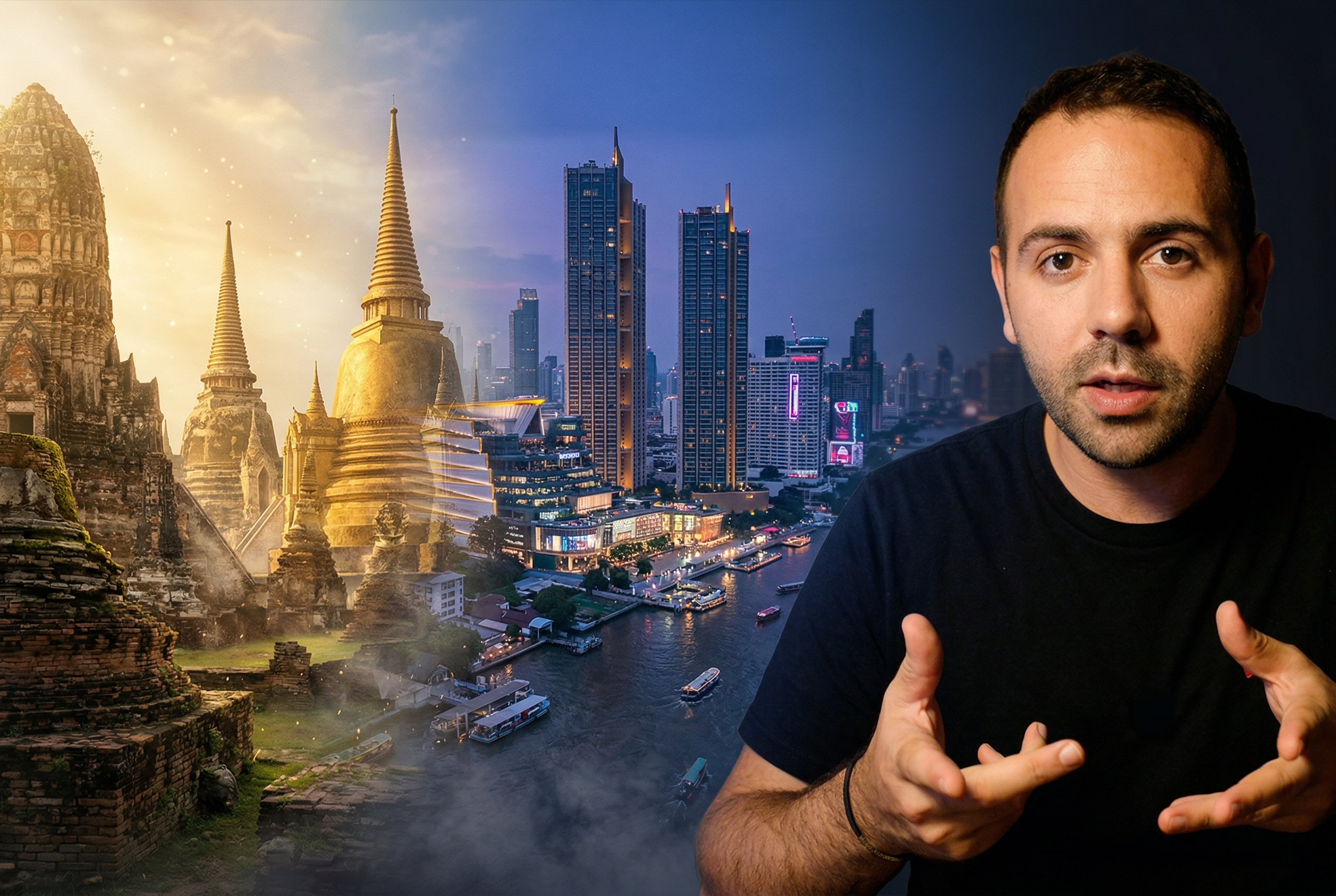
สารบัญ
Today is April 13, 2026. In Thailand, it's New Year's Day. According to the Thai Buddhist calendar, the year 2570 has just begun. And across the country, millions of people are celebrating Songkran — the world's largest water festival.
But most people don't really know Thailand. Dismissed as "beaches, nightlife, cheap vacation," this country is actually one of the most fascinating chapters in human history — a living testament to thousands of years of culture, belief, and civilization.
In this post — and in the video below — I tell Thailand's real story.
Time Works Differently in Thailand
Let's start with a simple question: What year is it?
For us, it's 2026. For Thailand, it's not. Thailand uses the Buddhist Era (B.E.) calendar, which runs 543 years ahead of the Gregorian calendar. While our calendar marks the birth of Jesus as year zero, the Buddhist calendar begins at the moment Buddha attained Nirvana in 543 BC.
This isn't a small quirk. It's a window into how an entire society understands time itself.
These Lands Were Never Empty
The Thai people who give the country its name were not its original inhabitants.
The Ban Chiang archaeological site — a UNESCO World Heritage Site in northeastern Thailand — is the country's equivalent of Turkey's Göbekli Tepe. Excavations there reveal rice cultivation dating back to 1500 BC, bronze metalwork, handcrafted ceramics, and burial artifacts proving that far older civilizations thrived on these lands.
The ancestors of the Thai people first appear in written records in the 1st century AD, in what is now southern China — the Yunnan and Guangxi regions. Pushed south by Chinese dynastic pressure, they followed river valleys until they reached the Chao Phraya plain, where they encountered the Khmer Empire.
From Sukhothai to Ayutthaya: The Birth of an Identity
The Sukhothai Kingdom, founded in 1238, is recognized as the official birthplace of Thai identity. King Ramkhamhaeng formalized the Thai alphabet during this era and established a remarkably open style of governance — legend has it he hung a drum outside his palace so any citizen could come and be heard.
The Ayutthaya Kingdom, founded in 1350, quickly became the region's dominant power. Some historians argue that by 1700, Ayutthaya was the most populous city in the world — with an estimated population of one million. Chinese, Japanese, Persian, and European traders all called it home. The cosmopolitan character of modern Bangkok and Pattaya isn't new; these lands have been global for centuries.
In 1767, the Burmese army sacked and burned Ayutthaya. The city was destroyed, but the state was not. The Chakri Dynasty soon emerged, and in 1782, King Rama I chose the eastern bank of the Chao Phraya River as the site of his new capital: modern-day Bangkok.
Muay Thai: From Battlefield to World Stage
Muay Thai is not just a sport. Known as "The Art of Eight Limbs" — two fists, two elbows, two knees, two kicks — it originated as military training during the Sukhothai era and evolved into a cultural institution. Today it is practiced in 158 countries and was officially recognized by the International Olympic Committee in 2021. At its core, it remains what it always was: an art form that preserves the dignity and identity of a people.
Songkran: Far More Than a Water Fight
Celebrated every April 13th, Songkran is Thailand's New Year festival. The word derives from the Sanskrit "Sankranti" — the transition of the sun from one zodiac sign to another. It is, at its root, an astronomically calculated new year with thousands of years of history.
Originally it was a solemn ritual: fragrant water poured slowly and respectfully over Buddha statues and the hands of elders. Over time, in the 40-degree April heat, that tradition transformed into something bigger — and today it is the world's largest water festival. In 2023, UNESCO added Songkran to its list of Intangible Cultural Heritage of Humanity.
Pattaya and Chonburi: Thailand's Economic Future
Understanding Thailand means understanding not just its culture, but its economic momentum.
The Eastern Economic Corridor (EEC) — covering Chachoengsao, Chonburi, and Rayong provinces — draws approximately 29 million tourists annually and accounts for around 15% of Thailand's GDP. It includes 26 industrial estates, the massive Laem Chabang Port (one of the world's largest container ports), and the expanding U-Tapao International Airport.
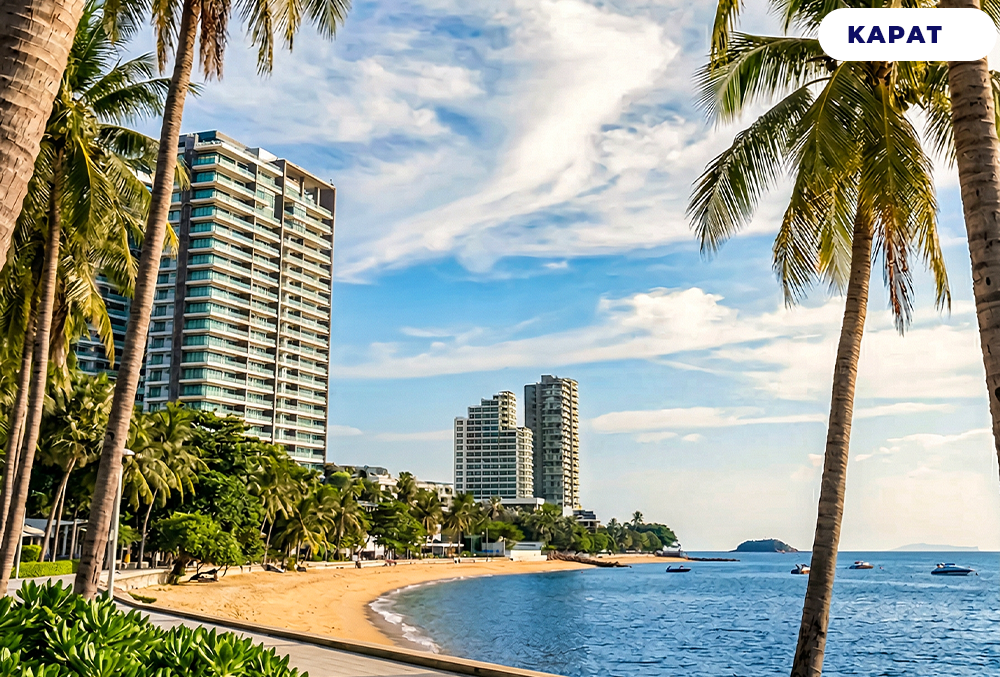
At the heart of this corridor is Pattaya. Contrary to popular perception, it is far more than a nightlife or beach destination. International schools, modern healthcare facilities, and a rapidly growing investor community have transformed it into one of Thailand's most strategically important cities. The arrival of Tomorrowland in Pattaya's Wisdom Valley in December 2026 — a 5-year deal expected to contribute approximately 21 billion baht to the Thai economy — is a powerful symbol of this transformation.
Watch the Full Video
I covered all of this — from the Buddhist calendar and Ban Chiang, to Sukhothai, Ayutthaya, Muay Thai, Ranat Ek, Songkran, and the founding of Bangkok — in a 25-minute documentary-style video.
👉 Watch on YouTube – You Don't Really Know Thailand
Thinking About Investing in Thailand?
At World of Condos, we guide Turkish and international investors through real estate opportunities in Pattaya and the broader Chonburi region. Understanding Thailand's history, culture, and economic dynamics makes every investment decision more informed — and more confident.
WOC Media
"World of Condos Media" was created to bring the latest trends, investment opportunities and lifestyle tips in the world of housing to our readers.
มีคำถามเกี่ยวกับบทความนี้ไหม?
เขียนคำถามของคุณ แล้วผู้เชี่ยวชาญของเราจะติดต่อกลับโดยตรง


 Burak Pehlivan